

Open Wearables
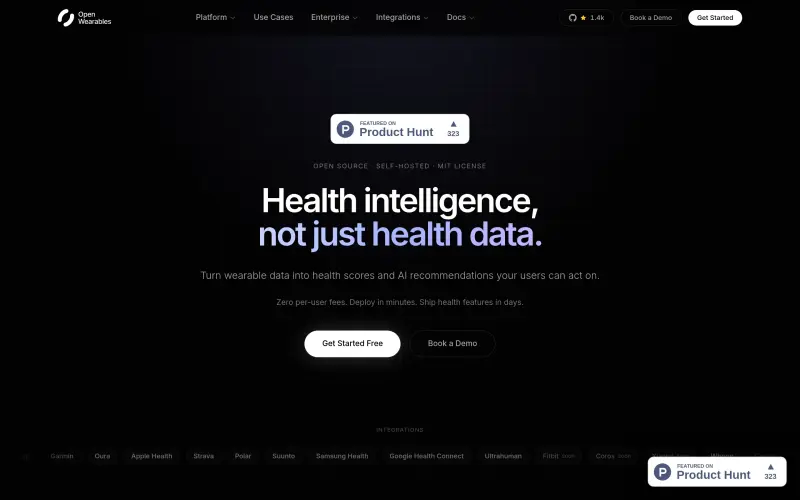
Transform wearable data into actionable health recommendations for your users with our open-source intelligence platform
- Use Cases
- Not listed yet
- Pricing
- Free
- Platforms
- Not listed yet
- Ideal For
- Not listed yet
Overview
Open Wearables: Turning Health Data into Actionable Insights
With Open Wearables, you can finally make sense of the health data from your wearable devices, turning it into personalized recommendations that improve your well-being, without relying on black-box algorithms or per-user fees.
Details
Key Features
- Automated health scoring that provides a clear picture of your physical condition, including sleep quality, recovery, and stress levels.
- A self-hosted platform that integrates with popular wearable devices like Whoop, Garmin, and Apple Health, giving you control over your data.
- An open-source AI engine that detects trends, flags anomalies, and connects patterns across health scores, offering personalized coaching without the need for expensive SDKs.
- Customizable coaching profiles that cater to different needs, whether it's fitness, recovery, or mental health, ensuring you get relevant guidance.
Best For
- Developers looking to build health-focused products without the burden of expensive data processing and algorithm development.
- Health and wellness professionals seeking a comprehensive platform to monitor and guide their clients' progress.
- Individuals interested in taking a more proactive approach to their health, using data-driven insights to inform their lifestyle choices.
Top Use Cases
- Using Open Wearables to create personalized fitness plans based on an individual's sleep patterns, recovery rates, and physical activity levels.
- Implementing the platform in a clinical setting to monitor patients' health trends and adjust treatment plans accordingly.
- Integrating Open Wearables into corporate wellness programs to provide employees with actionable health insights and coaching, improving overall well-being and productivity.
Integrations
- Seamless integration with a wide range of wearable devices and health tracking apps, including Whoop, Garmin, Oura, Apple Health, and more, ensuring comprehensive data collection.
Pros
- Offers a high degree of customization and control over health data and algorithms, provides actionable insights for improved well-being, and is cost-effective with zero per-user fees.
Limitations
- Requires some technical expertise for self-hosting and customization, and the open-source nature may demand more involvement from users in terms of community support and development contributions.
Read full editorial notes
Key Features
- Automated health scoring that provides a clear picture of your physical condition, including sleep quality, recovery, and stress levels.
- A self-hosted platform that integrates with popular wearable devices like Whoop, Garmin, and Apple Health, giving you control over your data.
- An open-source AI engine that detects trends, flags anomalies, and connects patterns across health scores, offering personalized coaching without the need for expensive SDKs.
- Customizable coaching profiles that cater to different needs, whether it's fitness, recovery, or mental health, ensuring you get relevant guidance.
- Transparent and audit-ready algorithms that allow you to understand and adjust the reasoning behind the recommendations, giving you full control.
Ideal For
- Developers looking to build health-focused products without the burden of expensive data processing and algorithm development.
- Health and wellness professionals seeking a comprehensive platform to monitor and guide their clients' progress.
- Individuals interested in taking a more proactive approach to their health, using data-driven insights to inform their lifestyle choices.
Top Use Cases
- Using Open Wearables to create personalized fitness plans based on an individual's sleep patterns, recovery rates, and physical activity levels.
- Implementing the platform in a clinical setting to monitor patients' health trends and adjust treatment plans accordingly.
- Integrating Open Wearables into corporate wellness programs to provide employees with actionable health insights and coaching, improving overall well-being and productivity.
Known Alternatives
- A more transparent and customizable alternative to proprietary health tracking platforms, offering users and developers more control over their data and algorithms.
- An open-source solution that stands out from commercial health analytics platforms by providing free, self-hosted deployment and zero per-user fees.
Integrations & Ecosystem
- Seamless integration with a wide range of wearable devices and health tracking apps, including Whoop, Garmin, Oura, Apple Health, and more, ensuring comprehensive data collection.
Pros & Cons
- Pros: Offers a high degree of customization and control over health data and algorithms, provides actionable insights for improved well-being, and is cost-effective with zero per-user fees.
- Limitations: Requires some technical expertise for self-hosting and customization, and the open-source nature may demand more involvement from users in terms of community support and development contributions.
Keep researching Open Wearables
Explore relevant products with a similar category, audience, or use case.
 LaReview
Streamline your code review process with structured plans and high-signal feedback, built for senior engineers who demand depth and accuracy.
LaReview
Streamline your code review process with structured plans and high-signal feedback, built for senior engineers who demand depth and accuracy.
 lowfat
Filter CLI output to reduce AI token costs
lowfat
Filter CLI output to reduce AI token costs
 Hermes Agent
Streamline your workflow with an intelligent agent that learns, automates, and assists you across multiple platforms.
Hermes Agent
Streamline your workflow with an intelligent agent that learns, automates, and assists you across multiple platforms.
Resources
Social Profiles
Useful Links
FAQ about Open Wearables
Concise answers based on the product's editorial information.
How does Open Wearables ensure the privacy and security of user health data?
Open Wearables is self-hosted, allowing users to maintain full control over their data, and it operates under an MIT license, ensuring transparency and community oversight.
Can I customize the coaching profiles and health scores to fit specific needs or populations?
Yes, Open Wearables provides customizable coaching profiles and open algorithms for health scoring, enabling users to tailor the platform to different use cases, such as fitness, recovery, or clinical monitoring.
Launched
Ownership
If this is your product, contact us and we can help transfer it to you.
 ChatGPT,
 Claude,
 Perplexity,
 Gemini