

- Use Cases
- Reverse Engineer Design
- Pricing
- Free
- Platforms
- Browser
Overview
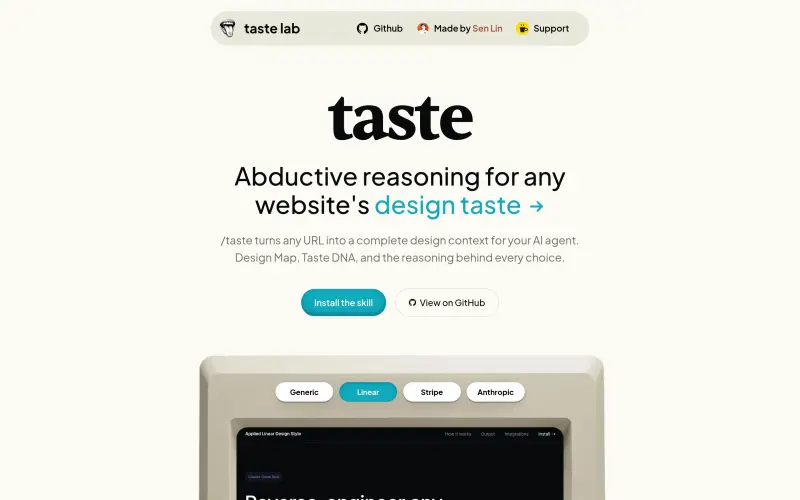
Taste is a tool that helps designers and developers understand a website's design DNA by analyzing the deliberate trade-offs made by the designer. It's particularly useful for those who want to reverse-engineer a website's design taste and apply it to their own projects.
Taste uses abductive reasoning to extract the design context from a website, including the measurements, patterns, and taste principles that underlie its design. This allows users to gain a deeper understanding of the design decisions that went into creating a website, and to apply those same principles to their own design work.
Details
Key Features
- Extracts design measurements from a website, including precise values for colors, typography, and spacing
- Detects patterns in the design, including systematic rules and design goals
- Inferes the taste principles that underlie the design, including the deliberate trade-offs made by the designer
- Provides a detailed output, including a design map and taste DNA, that can be used to inform design decisions
Best For
- Designers who want to reverse-engineer a website's design taste and apply it to their own projects
- Developers who need to implement a design consistently across multiple platforms and devices
- Design engineers who want to analyze and optimize the design of a website or application
Top Use Cases
- Reverse-engineering a website's design taste to apply it to your own project
- Consistently implementing a design across multiple platforms and devices
- Analyzing and optimizing the design of a website or application
Integrations
- The available source material does not clearly specify integrations, but Taste is mentioned as a Claude Code skill, suggesting that it may be integrated with other Claude Code tools and platforms
Pros
- provides a detailed and nuanced understanding of a website's design DNA
- extracts design measurements and patterns
- infers taste principles and trade-offs
Limitations
- May require technical expertise to fully utilize the output and apply it to design decisions
Read full editorial notes
What is Taste?
Taste is a tool that analyzes a website's design and extracts its underlying design DNA, including the measurements, patterns, and trade-offs that make up its design taste. It provides a detailed breakdown of the design elements that make up a website, including colors, typography, spacing, and more.
What are the key features of Taste?
Extracts design measurements from a website, including precise values for colors, typography, and spacing
Detects patterns in the design, including systematic rules and design goals
Inferes the taste principles that underlie the design, including the deliberate trade-offs made by the designer
Provides a detailed output, including a design map and taste DNA, that can be used to inform design decisions
Who is Taste best for?
Designers who want to reverse-engineer a website's design taste and apply it to their own projects
Developers who need to implement a design consistently across multiple platforms and devices
Design engineers who want to analyze and optimize the design of a website or application
What can you use Taste for?
Reverse-engineering a website's design taste to apply it to your own project
Consistently implementing a design across multiple platforms and devices
Analyzing and optimizing the design of a website or application
How does Taste compare to alternatives?
Unlike other design analysis tools, Taste uses abductive reasoning to extract the underlying design DNA of a website, providing a more detailed and nuanced understanding of the design
Taste provides a more comprehensive output than other tools, including a design map and taste DNA that can be used to inform design decisions
What integrations and ecosystem support does Taste offer?
The available source material does not clearly specify integrations, but Taste is mentioned as a Claude Code skill, suggesting that it may be integrated with other Claude Code tools and platforms
What are the pros and limitations of Taste?
Pros: provides a detailed and nuanced understanding of a website's design DNA; extracts design measurements and patterns; infers taste principles and trade-offs
Limitations: May require technical expertise to fully utilize the output and apply it to design decisions
Keep researching Taste Lab
Explore relevant products with a similar category, audience, or use case.


Resources
Social Profiles
Useful Links
Launched
Ownership
If this is your product, contact us and we can help transfer it to you.
 ChatGPT,
 Claude,
 Perplexity,
 Gemini